Insights from Bruce D. Roffé at the BenefitsPRO Broker Expo
At this year's BenefitsPRO Broker Expo in Chicago, Bruce D. Roffé, President and CEO, H.H.C. Group, moderated a timely and candid panel discussion titled:
"Repricing Isn't Enough: What Brokers Need to Communicate About True Cost Containment."
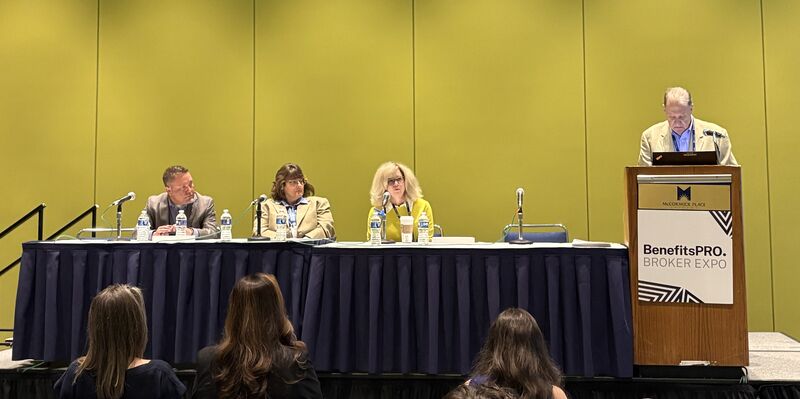 BenefitsPro Broker Expo taken from Paul Wilson's LinkedIn post
Bruce was joined by an accomplished panel of experts including: Kari Niblack. CEO of Boon Chapman, Allison De Paoli, founder, Altiqe Consulting, and Dan Harrison, director of Business Development, Skyward Accident & Health—bringing together perspectives from employer consulting, third-party administration, underwriting and risk strategy.
Together, the panel tackled one of the biggest questions facing brokers and industry stakeholders:
If healthcare costs keep rising… despite more vendors, more discounts and more "solutions"… what's actually working?
The answer wasn't another vendor.
It was strategy.
And one message came through loud and clear:
1. Cost Management Is Not the Same as Cost Containment
One of the first distinctions Bruce challenged the audience to make was this:
Cost management reacts to spend.
Cost containment changes the spend trajectory.
Too often, employers are presented with renewals, discounts, rebates or network savings and told costs are "under control."
But if those costs rise again the moment the program stops…
It was never true containment to begin with.
Real cost containment:
That's where brokers move from operator… to strategist.
One of the liveliest discussions centered around what Bruce called:
"The Discount Myth."
Healthcare bills may show large discount percentages—but are plans actually paying fair, defensible prices?
Not always.
As Bruce challenged the room:
"Are we measuring savings… or just measuring discounts?"
The reality:
Billed charges are often inflated.
A discount percentage doesn't guarantee value.
The allowed amount is what truly matters.
For self-funded plans, focusing on optics instead of actual allowed costs can quietly drive long-term overspending.
A decade ago, a $50,000 claim might have raised eyebrows.
Today?
One of Bruce's strongest statements of the session:
"If no one is touching individual hospital claims… no one is containing costs."
That line resonated.
Because while many strategies operate at the aggregate level, overpayment happens claim by claim.
Real savings happen through:
Perhaps the boldest conversation of the day centered around one simple truth:
Vendors don't contain costs—authority does.
Bruce challenged brokers to ask:
Another major takeaway:
When cost containment is working…
Employees shouldn't feel disruption.
Plans shouldn't feel confusion.
Brokers shouldn't have to "re-sell" the strategy every renewal.
As Bruce summarized:
Good cost containment changes how the system behaves.
Bad cost containment changes the story every year.
What Brokers Should Take Away
Bruce closed the session with five key messages:
Looking Forward
As conversations around cost containment continue at industry events nationwide, H.H.C. Group looks forward to connecting with partners at ASCEND, June 8–11 in Nashville, where our team will continue the discussion around what's actually driving measurable savings in today's self-funded marketplace.
Attending ASCEND? Let's connect.
Not attending? The conversation doesn't stop here.
Contact H.H.C. Group at Sales@hhcgroup.com or call 301-963-0762 ext. 631 to continue the discussion.

 © 2024 HHC Group. All Rights Reserved.